



Greece
Greece is ancient sun-bleached ruins piercing blue skies, the balmy Aegean lapping an endless coastline and a culture alive with passionate music, wonderful cuisine and thrill-seeking activities.
Greece is a country in southeastern Europe with thousands of islands throughout the Aegean and Ionian seas. Influential in ancient times, it’s often called the cradle of Western civilization. Athens, its capital, retains landmarks including the 5th-century B.C. Acropolis citadel with the Parthenon temple. Greece is also known for its beaches, from the black sands of Santorini to the party resorts of Mykonos.
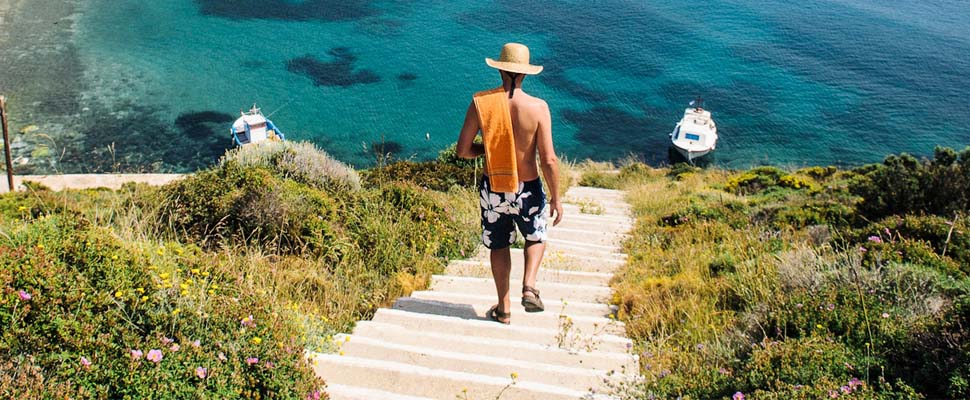
Six thousand Islands
Ancient ruins, piercing blue skies, the balmy Aegean, and a culture alive with passionate music and incredible food – Greece offers all this and more. Whether you’re sailing into a colourful harbour in April, listening to the pounding surf on a sun-drenched deck in the height of July or exploring the Acropolis museum in November, your travel senses will be in overdrive.
It’s fair to say Greece ticks a lot of boxes as a travel destination. And Family packages and holidays. Fascinating ancient monuments. Big tick. Hiking trails galore. Tick. Traditional hilltop towns and charming fishing villages. Tick and tick. And then there are the stunning beaches, buzzing cities, and amazing national cuisine to consider. In reality, you could spend months exploring everything on offer.
Did you know that Greece has around 6,000 islands, islets and rocky islets? 2,000 of them are islands and only 107 of them are inhabited!
Good to know
Country
Greece
Visa requirements
You can travel to countries in the Schengen area for up to 90 days in any 180-day period without a visa.
Languages spoken
Modern Greek
Curency used
Euro
Population
10.64 million (2021)
Municipalities
The municipalities of Greece (Greek: δήμοι, romanized: dímoi [ˈðimi]) are the lowest level of government within the organizational structure of the state. As of 2021, there are 332 municipalities, further divided into 1036 municipal units and 6136 communities.[1] Thirteen administrative regions form the second-level unit of government. The regions consist of 74 regional units,[1] which mostly correspond to the old prefectures. Regional units are then divided into municipalities. The new municipalities may be subdivided into municipal units(δημοτικές ενότητες, dimotikés enótites), consisting of the pre-Kallikratis municipalities. These were further subdivided into municipal communities (δημοτικές κοινότητες, dimotikés koinótites) and local communities(τοπικές κοινότητες, topikés koinótites) according to population, but are simply named communities(κοινότητες, koinótites) since the entry into force of the Kleisthenis I Programme on 1 September 2019.[2]